Head Grower, Peace Glory Farm
Our head grower on why the health of a farm is decided underground, and what a handful of earth will tell you if you know how to ask.
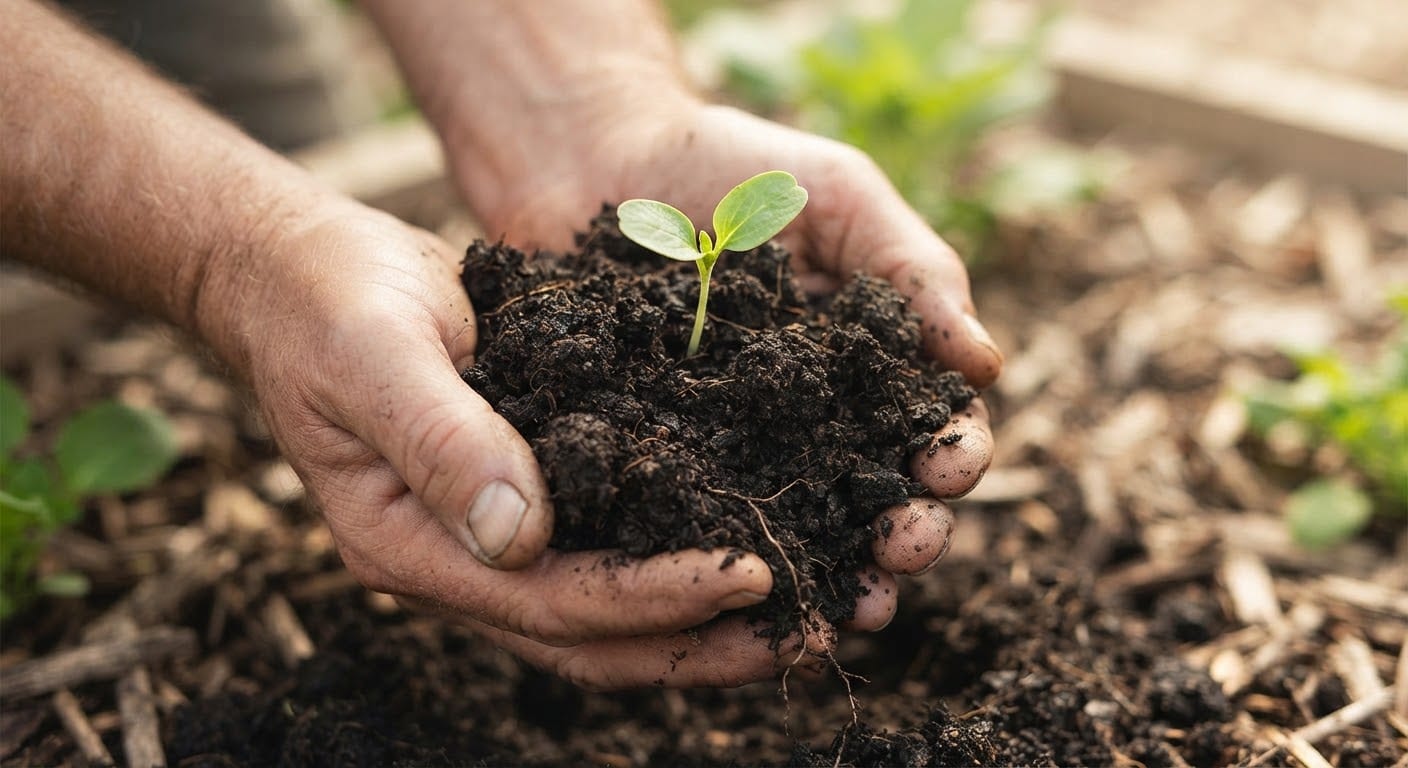
Pick up a handful of soil from a bed that has been worked well for a decade and it does not behave like dirt. It holds together when you squeeze it and falls apart when you stop. It smells sweet rather than sour. It is, unmistakably, alive.
Most of what determines whether a farm thrives happens where nobody looks. The visible crop is the last few percent of a process that runs almost entirely below the surface, in a fungal and bacterial economy far older and more complicated than anything we have built above it.
What we stopped doing
The single largest change we made was to stop turning the soil. Ploughing looks productive and feels satisfying, and it destroys the fungal networks that move nutrients between plants. We now disturb the ground as little as we can get away with.
- No ploughing or rotavating on established beds
- No bare soil — something is always growing or mulching
- No synthetic nitrogen, which suppresses the organisms that fix it naturally
- No compaction — permanent paths, and nothing heavy on the growing area
You do not feed the plant. You feed the soil, and the soil feeds the plant.
What we started doing
Compost, mostly. Every scrap of organic matter the estate produces — kitchen waste, bedding, prunings, spent crops — goes into windrows that are turned on a schedule and returned to the beds as finished compost within the year.
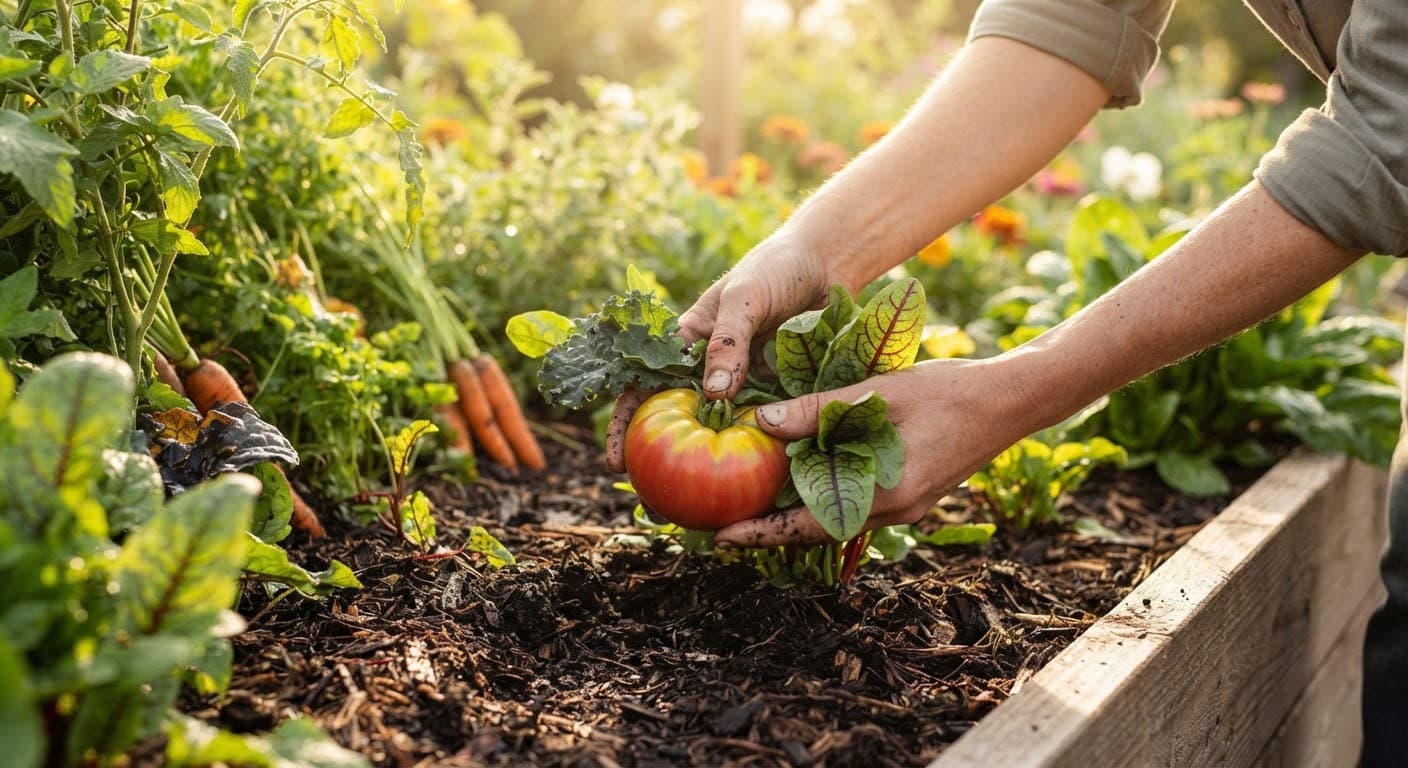
The results are slow and then sudden. For the first two seasons very little appeared to change. By the fourth, the beds were holding water through dry spells that would previously have needed irrigation, and we had stopped losing crops to the diseases that used to arrive every August.
If you join a cultivation session, this is what you will actually be doing: not planting a token seedling, but the unglamorous, cumulative work of putting organic matter back into the ground. It is the whole job.